
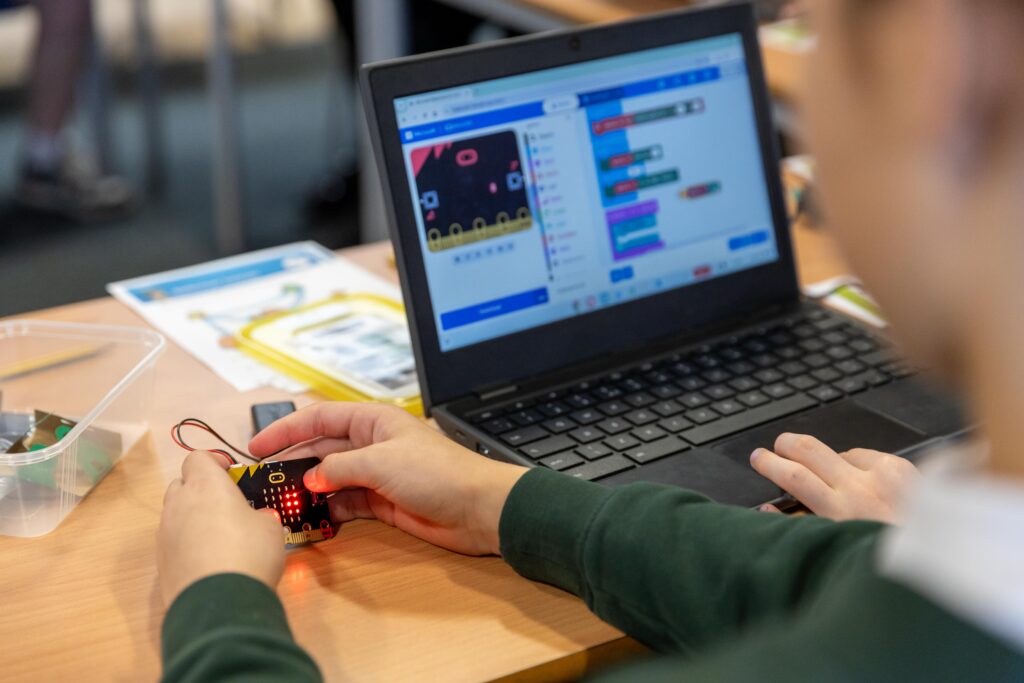
In 2023, Nominet partnered with BBC Education and the Micro:bit Educational Foundation to donate micro:bits to primary schools across the UK as part of the BBC micro:bit – the next gen campaign. Now that the programme has concluded, we’re proud to reflect on its impact.
More than 600,000 devices were delivered to over 90% of primary schools in the UK, helping to spark creativity and teach computational thinking in classrooms.
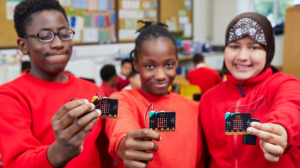
A micro:bit is a pocket-sized programmable computer equipped with sensors, connectors, and inputs that enable a wide range of interactive projects.
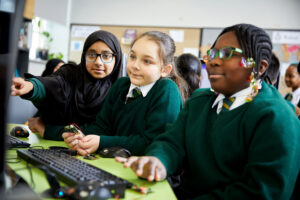
Children can let their imagination run wild to code exciting projects and activities. In fact, findings from our final independent evaluation showed that after learning with micro:bit, 90% of young people agreed that “coding allows me to create my own ideas.”
With 65% of primary school children expected to work in roles that don’t yet exist, equipping them with strong digital foundations has never been more important. The micro:bit has proven to be a powerful tool for introducing digital skills and coding at an early age. Our donation played a vital role in supporting both pupils and teachers as they prepare for a rapidly evolving digital future – building confidence in computational thinking, programming, digital creativity, and even early machine learning concepts. It’s been great to see the work towards this aim come to fruition, as 81% of girls who recalled using micro:bit in lessons said they’d like a coding‑related job.
Watch the video below for more about the impact of the BBC micro:bit – the next gen campaign:
Launching the campaign
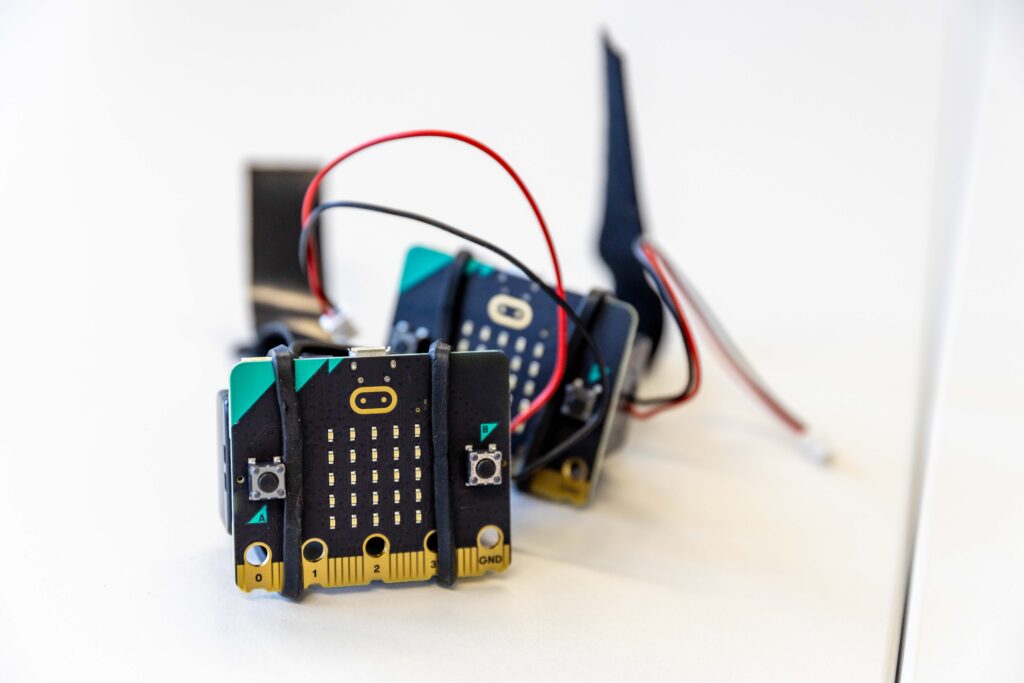
The Micro:bit Educational Foundation designed new classroom packs, which included 30 micro:bits, cables, batteries, and a brand new wearable accessory that allowed pupils to attach and experiment with the devices in new ways. UK primary schools were invited to apply for a free pack in 2023, with deliveries taking place throughout 2023 – 2024.
The campaign officially launched in September 2024 with national coverage on BBC Breakfast and a series of engaging collaborations across CBBC. Popular programmes such as Blue Peter, Newsround, The Dumping Ground and Football Academy helped introduce the micro:bit to young people across the UK.
Nominet also launched a free monthly prize draw for schools to win £5,000 to purchase digital equipment for their classroom. Over the course of the competition, over 1,500 schools entered into the draw, and we awarded £115,000 in prizes to UK primary schools.
And the campaign closed with the ‘Gladiators micro:bit challenge‘ a nationwide design competition, inspired by the iconic BBC show Gladiators. Pupils were challenged to design fitness gadgets using the micro:bit, combining creativity, physical health, and problem-solving. Almost 400 classes submitted designs to enhance the Gladiators’ athletic performance, from reaction timers to gadgets that boosted speed, strength and agility.
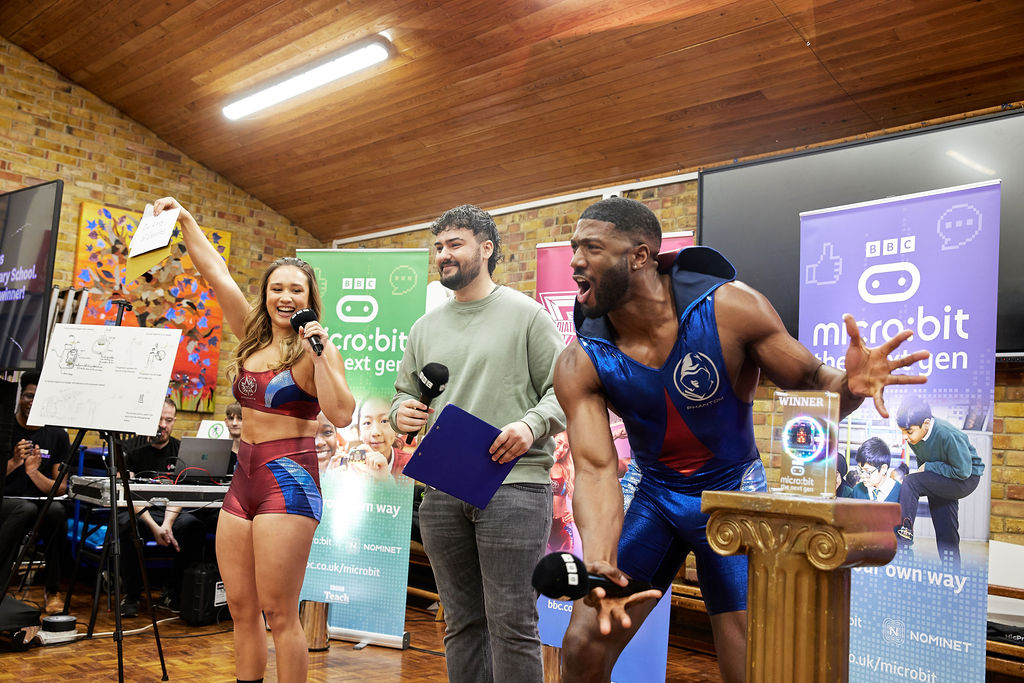
Our own Amy O’Donnell was proud to be invited to judge the entries. Amy O’Donnell from the Social Impact team was on the judging panel, and commented:
“Being part of the judging panel for this competition was a great privilege, considering how many hours of thought in design and creativity in STEM went in from classrooms across the UK. Reading the applications over an intense weekend, I was struck by the creativity, innovation and imagination. Research shows getting young people engaged in computing from an early age makes a huge difference in the skills and decision making later in life. The brief to design for the Gladiators sparked inspiration among so many UK primary school pupils and offered an amazing showcase of what the micro:bit can do.”
– Amy O’Donnell, Social Impact Lead at Nominet
Introducing machine learning with the playground survey
Another highlight within the programme was the BBC micro:bit playground survey, a hands-on data science project that encouraged children to explore and analyse their own playgrounds. This included the launch of a new machine learning tool that enabled pupils to train and test their own models using movement data collected with micro:bits.
Developed by the Micro:bit Educational Foundation, in partnership with the BBC and the Office for National Statistics, the project turned playgrounds into outdoor learning labs where children gathered, interpreted, and made sense of real-world data.
Measuring the impact
Independent research ran throughout the campaign to measure its impact – and the results show just how transformative micro:bit has been for teachers and pupils alike.
Teachers reported a rise in confidence, with 87% of those who recalled the training saying that using micro:bit helped them feel more assured when teaching computing. More than 80% would recommend it to colleagues, and over 90% plan to use it again next year. Teachers also saw broader benefits, with 79% noticing improvements in pupils’ logical reasoning, communication, and other wider skills.
Students responded with real enthusiasm. 88% of those taught with the micro:bit said computing was more fun than other subjects, and 95% wanted to keep using it in lessons.
Teachers also told us that micro:bit lessons made a meaningful difference for their SEND students. 78% said there was something in particular about micro:bit lessons that really engaged learners with additional needs, and many reported that all children – regardless of ability – were able to take part and solve problems independently.
Our funding of a previous accessibility project supported a wide range of improvements for students with special educational needs and disabilities. A calmer, more accessible “meet the micro:bit” introduction was created after autistic students said the original version felt overwhelming.
In that previous project, a British Sign Language and American Sign Language glossary was developed so deaf students can learn key computing terms in their own language. A braille labelled graphic of the micro:bit was produced to help blind learners understand the device through touch. We also backed work to identify and develop physical accessibility accessories, making it easier for students who rely on assistive switches or alternative inputs to join in. Alongside this, clearer accessibility guidance and updated information were added across the micro:bit website, editors, and learning materials. As the next gen programme comes to an end, we can reflect on how its impact continues to shape classrooms in the UK. This campaign n is an example of how technology, tools, and training can contribute to making digital skills fun and accessible in classrooms. Alongside partners, we have lots to celebrate as these devices continue to be used in primary schools across the country. Meanwhile, the Micro:bit Educational Foundation is committed to inspiring and supporting teachers as they equip children with the digital skills and confidence they need for the future – and we look forward to what they create next.
Explore more about our projects with Micro:bit in our news and blogs:
 Back to all blogs